
Writing from USAID (part 1?)
dispatch from a writing group

Hi all!
First, a few announcements:
I’m opening up some offerings for fall! Two workshops, the first a Grief Writing Workshop, and the second a more general Creative Prose Workshop. All details are here, message me with any questions.
I have also decided, after a few inquiries, to begin offering private writing coaching on a limited basis. This coaching will of course have a grief- and trauma-informed lens, but will not exclude any projects. I haven’t finalized details for this yet, and will update with more information when I have posted it on my website. For now, if anyone thinks they would benefit from a more personalized, one-on-one style of writing coaching/teaching/editing, please feel free to get in touch (info@nelliehermann.com) with details about your situation.
It’s July?!
My apologies for going silent for so long. May and June were whirlwinds for various reasons. I am now typing this from Paris, where a heat wave has recently broken, thank goodness, I feel like a human again. This past month I taught a course here for undergraduates, very fun and also very fast! I hope they feel they learned something; TBD.
It was the 4th of July; I do not feel like celebrating America. Although I feel a very welcome surge of hope and excitement around my city’s choice for democratic mayoral candidate, for the most part the news from America has been more and more bleak and disturbing and difficult to even absorb.
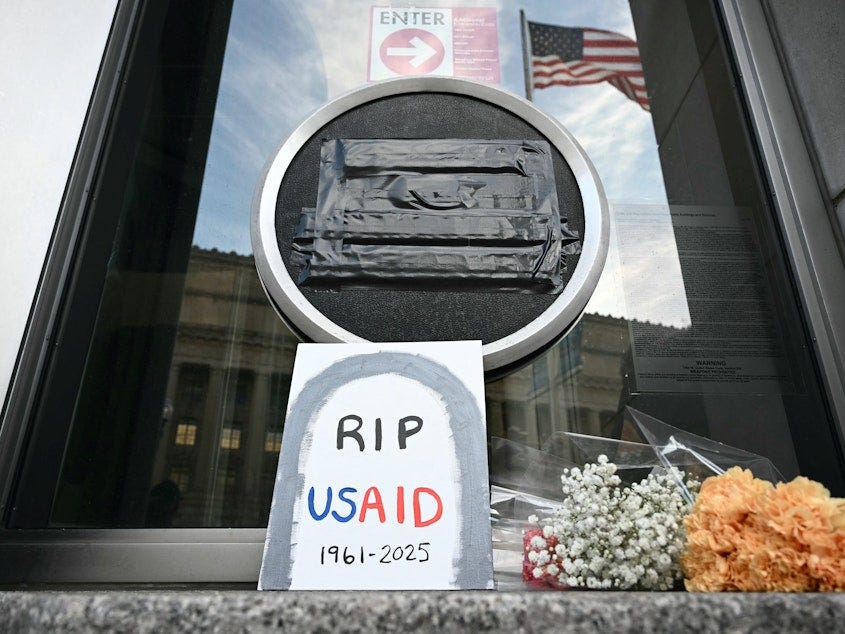
Ever since my last post I’ve been wanting to share something about the writing group I’ve been running since the beginning of April with former USAID employees. This group has been so wonderful, but I also find myself clamming up at the thought of writing anything coherent about it. In large part I think this is connected to politics (which I don’t want to write about), and the depth of despair I feel around what is happening/ has happened in America since January …the writing group is, of course, a byproduct of terrible, murderous decisions with enormous consequences for our world that I don’t like to think about. Everyone who has attended the group sessions has given themselves for years — decades in many cases — to the cause of humanitarianism; they are public servants who have now been rejected and tossed aside in an epically cruel and sudden way and who are, each of them, connected to huge networks of needful human beings in other countries who will now face even more painful circumstances and in some cases death. It’s horrific.
There has been enormous pain, in the group, regularly expressed, regularly witnessed. There is enormous anger alongside the sadness. It has been, really, a grief writing group, although we are not focusing there explicitly, and I didn’t call it that (in the invitation to join, I called it a “narrative support group”). There is much happening in our sessions aside from the writing — people who otherwise might be isolated in their loss have had the opportunity to connect to others who are going through the exact same thing, which seems particularly important in a situation like theirs; there really is no one “outside” their particular universe who knows just what this particular loss feels like. There are incredible people and incredible stories in this group; it has been such a privilege to be a part of it.
There is much to say - about the circumstances, about the pedagogy, about the “how” or “why” for what the group has done and how it has worked. About the possibilities for what could come next (after our six sessions were up, everyone wanted to continue, so we have). But I think, rather than write about these various aspects, perhaps for now the simplest way to tell about the group is just to share some selections of the writing that has been done.
Just briefly, to how the group came about: this began because a dear old friend of mine worked for USAID for many years, and she reached out to me in March when things began to crumble and asked me if I might be willing to run a grief writing workshop for her team. As things at USAID continued to progress, she thought that in fact we might want to offer something to a wider expanse of people; she reached out to the person who was doing psycho-social support (of course, there had once been a whole office for this; now it was one formerly-retired person volunteering her time) and we wrote up a pitch to send around. 96 people signed up; 30-something came to our first session. After that, we had between 18-25 people come each time. We met every week for two months and then have been meeting more sporadically since I left for Paris. We read a poem together, we write together, and then usually I break them into small groups to share what they’ve written with one another.
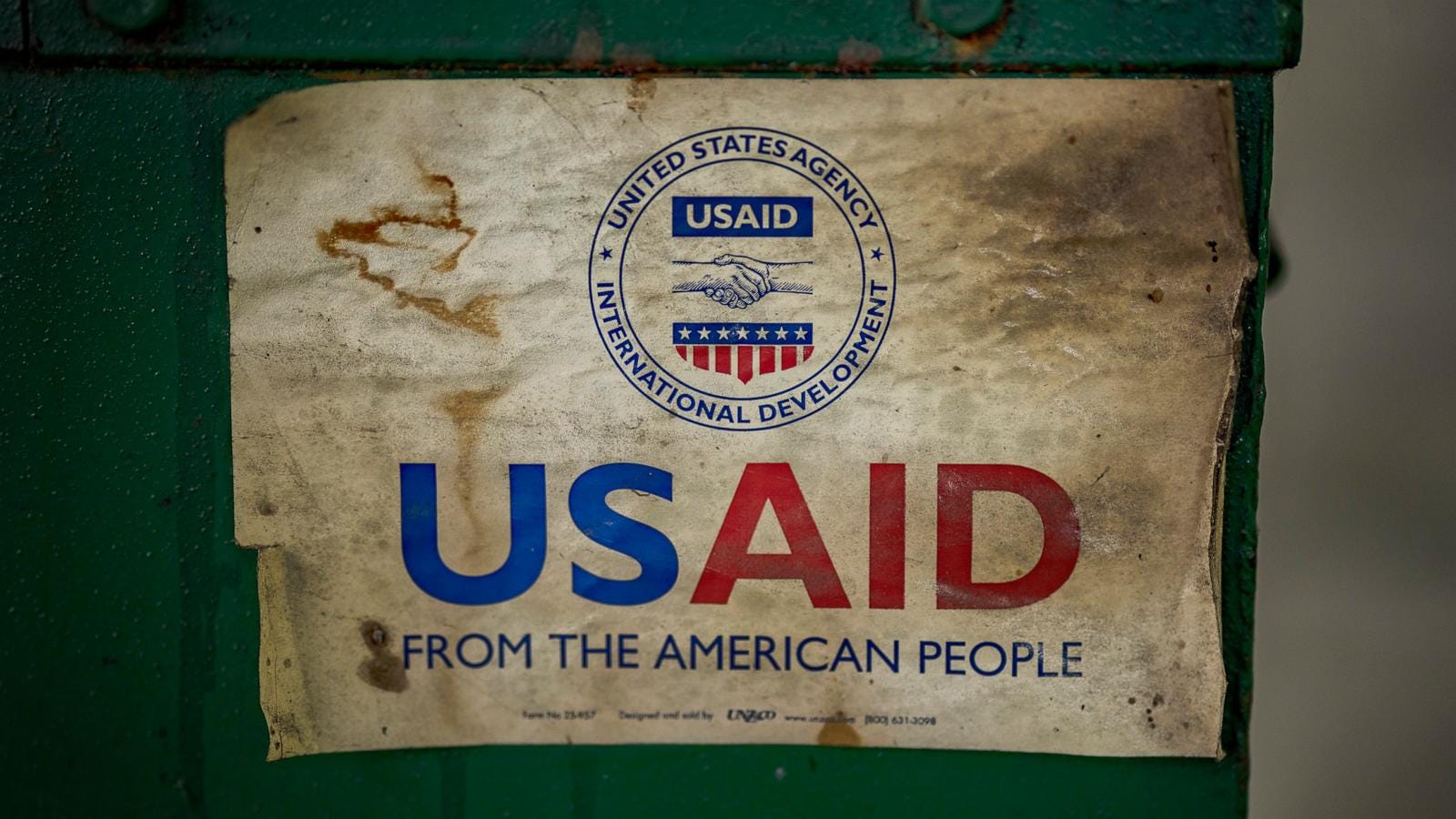
I will only share a few pieces here; maybe I’ll do so in two installments so that I can share a few more. These first two are from our first session. The poem we read was “A Portable Paradise” by Roger Robinson. The prompt I gave was to write about their portable paradise. I will simply share this work without commentary, as I trust the power is evident and clear.
First, this piece by Mark Adams:
The faces I’ll only see once, the colors of those faces, languages of words I’ll never understand. The imprint of their cultures and sounds and tastes, the way in which I slept there. The sound and smell of markets, the nuanced interactions seen in my periphery from which I only grasp a tenor.
I can’t pocket this, I can’t grasp how elusive yet impactful this time was – and is. I’m not different from it, I am not foreign to it, just as I was not foreign to those continents. These are extensions of selfhood, a non-otherness that educated who I am and how I see the world. To take this away – which, wait, please say is impossible – is to ask me to breathe less deeply, to take away the seeing from others’ eyes, to scour my home of the rich ambers, deep blues, and dusty oranges.
This is my paradise: that which I’ve seen and which I’ll ever-long to see again. More than seeing though, it is a being: a photo doesn’t capture what these “posts” will always mean to me. I must keep my lens open, my aperture wide, and carry the dust of my travels with pride.
Next, this poem by Jennifer Connolly:
Paradise
Christ said, “I tell you true
Today Paradise awaits you.”
A promise to a dying thief.
Maybe it includes me, too.

But where will I go?
What reward will be mine?

A golden throne and angels singing?
A heaven of virgins and honey?
White beaches and azure waves crashing?

No.
I do not think
they are meant for me.

Maybe this spring could be enough.
(Will this spring be enough?)

The froth of white blossoms
Beating against ash sky,
Storm-tossed and flailing.

The yellow daffodils
Drooping along grey rocks,
Rain-ravaged and failing.

The noisy chickadees
Creeping among brown twigs
Love-addled and frail.

This reckless exuberance
Mocks me.
This season of penance
Is hard to bear.

If death is coming, let it come.
Quit pretending that the end
is not near.

Each cherry blossom,
each tender green shoot
Carries the seeds of its
corruption, dissolution.

Let others pick bouquets
And sing sweet songs of spring.
I see only decay.

In this enchanted garden,
I drop to my knees and groan,
Sick to my very core.

Promises, promises.
I know the score.
A new day is coming.
The Lord will provide.

But this dark Lenten season,
I can’t trust that distant shore.

Soul, battered and bitter,
My tattered cloak I rend.
Consumed by a grief
I can’t transcend.
In another session, we read "Let Me Begin Again," by Major Jackson, inspired by an earlier poem of the same title, by Philip Levine. I asked the group to write to the prompt “let me begin again.”
First, there’s this piece by Julia Kennedy:
Let me begin again to open all the doors. Let me ask long settled questions and retread familiar pathways. This time I can choose to go a different way.
The benefits of age- I have seen where some of this ends and I have a better sense of what I might control and what I surely do not. Let me begin again and weigh the risks differently. Let me treasure this young heart and its quixotic wishes. Let me invest my time and effort in that which brings me joy rather than success.
Goodbye to all that, to the desk and title, the benefits and promotions. Goodbye to hierarchy and hiring mechanisms and winning the Washington way. Let me begin again from the place where I last started. I do not need to mark the way. I will set off with my courage and creativity, my loves and past mistakes. I will travel some distance in any direction and surely return right here.
And next, this poem, “Begin Again,” by Annaliese Limb:
Let me begin again.
Let me not take a day, a moment for granted.
Let me begin again even though I don’t want to.
Even though I have been forced to do so.
It is born not out of curiosity, nor adventure. Not a milestone reached or exceeded.
It has been thrust upon me. Upon us.
Let me begin again.
Let me be open to challenge even though I’m exhausted.
Let me smile at mistakes I am sure to make.
Let me think of the incredible new friends and people I will meet. I have them from every part of my life. So dear. And I have them because of all the times I have moved somewhere new, worked somewhere new, went out when I was tired.
Those were my choices though. I began again by my choice.
How this will be different.
Lastly, here are two simple poems to end with, reminders perhaps to all of us to open our eyes to the small moments of beauty that we all have access to despite the horror unfolding around us. In this session we read James Wright’s A Blessing, one of my favorite poems, and I asked the group to write about a blessing. Here are two of the responses:
Untitled, by Julie Grier-Villate:
On the porch
as the sun eases toward its rest
just across the lake,
the heat lies heavy on my skin,
a part of my perspiration,
a gentle, unavoidable weight.
The ducks, mergansers, and geese
dance and squonk across the water,
a last frenzy
before the evening nest.
Tree birds send
their smaller, sharper cries,
chasing the plentiful bugs,
taking flight.
And
A Blessing, by Margaret Anderson:
A late spring evening – the rain has stopped.
Darkness outside at the edge of the woods.
Moisture lingers in the air.
Behind the trees, the northwest branch of the river swells.
Frogs sing gently.
Tonight I hear them.
Where do they go when they don’t make a sound?
A scimitar moon hangs in the sky.
No one else is out.
Just the frogs, the insects, the moon, and me.
Thank you to all of these writers for allowing me to share their work! So much gratitude for all the participants of this group for showing up and sharing just the smallest bit of their pain and their writing, and for allowing me to be a witness. I hope to share more in a future dispatch.
Thank you for sharing this deeply personal work...and for running the program. Brava!
Truly honored to be a part of this group, so well-stewarded with your generous care and insight. Additionally grateful that you’d feature my work here.